The Future of In-Store Displays: Digital Signage Trends for 2026
The Future of In-Store Displays: Digital Signage Trends for 2026
The retail industry is changing rapidly because customers seek more tailored experiences, and technology is rapidly changing. Digital signage has ceased to be a mere static advertisement and has been transformed into an interactive and smart element in the shopper experience. Companies embracing such innovations experience an actual improvement in their engagement, sales, and brand loyalty.
The following are major trends in digital signage that will influence physical retailing in 2026.
Personalization in Real Time Powered by AI.
One-size-fits-all and generic messages are soon becoming a thing of the past. The digital signage in 2026 applies artificial intelligence to ensure that content is personalized when a customer walks in. With Wi-Fi analytics or opt-in mobile signal data—and in full compliance with privacy laws such as GDPR and CCPA—displays can dynamically change their messages depending on their perceived age range, previous purchase history, time of day, or even real-time store traffic.
Such instant personalization means that content is always relevant, engaging, and more likely to lead to action without user privacy being violated or manual input being necessary.
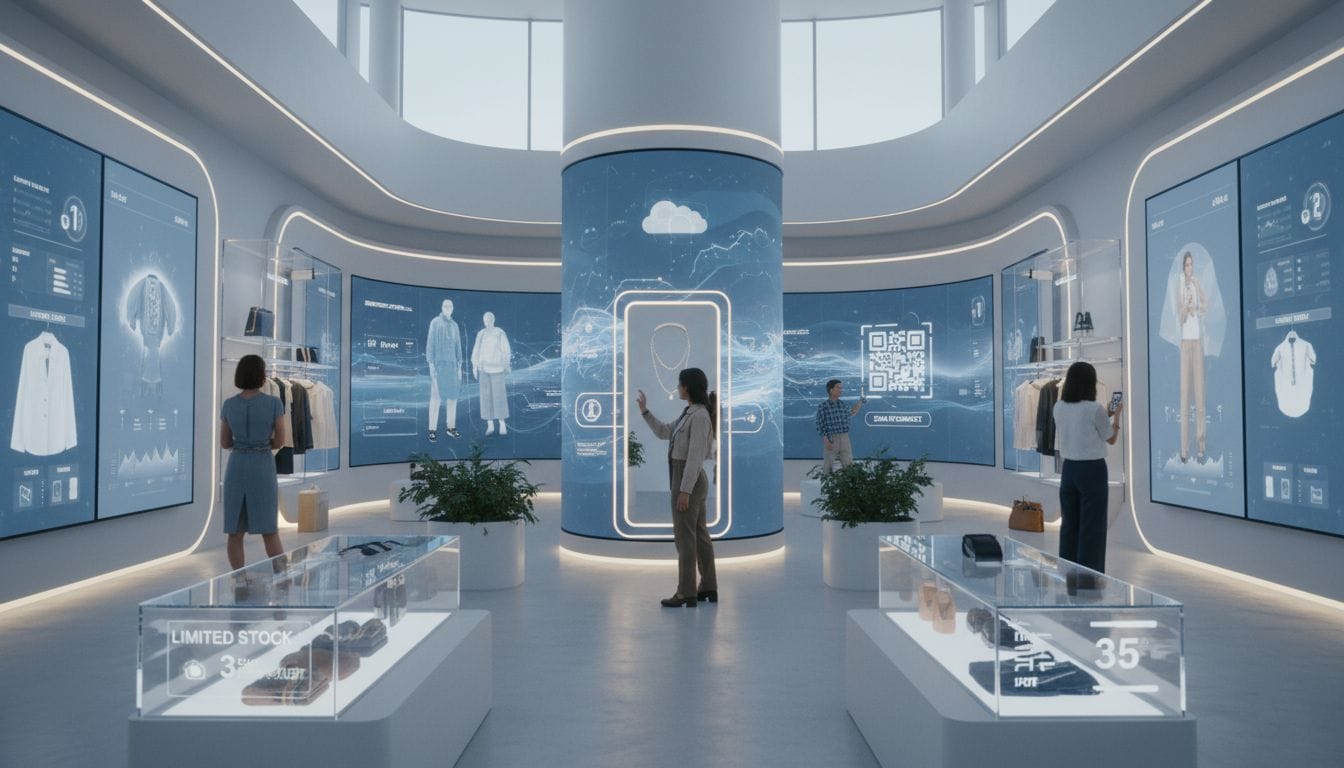
As an example, an alcoholic beverage stand, close to the checkout, may be used to display energy drinks in the morning and sparkling water in the afternoon. A fashion store might have a mirror-built screen suggesting accessories that will complement those that a shopper has in his/her hand. This is a relevant aspect that attracts attention and motivation to purchase.
Smooth mobile and e-commerce integration.
Digital signage is no longer an independent medium. The most useful systems of 2026 are integrated into the digital ecosystem of a brand to the fullest extent. Customers are able to scan a QR code that will take them to the product pages, loyalty programs, or customized offers within the mobile application of the retailer.
Customers are also able to view real-time inventory through this integration. A digital shelf tag may show that there are only 2 left and allow shoppers to order extra and have that delivered to their home—all on the same screen. The outcome is an omnichannel experience that is friction-free, connecting in-store exploration and online fulfillment.
Engagements and Non-Contact Experiences.
Touch screens are not vanishing, yet it is evident that the trend is moving to touchless interactions, led by health awareness and the changing tastes of the users. Gesture control, voice activation, and proximity activation will be the norms in digital signage in retail outlets by 2026. A shopper only has to move a hand to scroll through a list of products, request an interactive display to provide them with more information, or even initiate an instructional video by just standing near the screen.
These communications are more natural, less physical, and more accessible—stores are now more welcoming, contemporary, and sensitive to customer requirements.
Sustainability-Driven Design
Retailers are under increasing pressure to minimize their impact on the environment, and digital signage technology is reacting. The current displays have also been designed with energy-efficient LED panels that automatically regulate their brightness depending on the lighting in the surrounding area. Intelligent power control is also common on many systems, which means that they are offline during off-hours or in low-power mode when motion is not detected.
Manufacturers are also making more of their hardware with recycled materials and creating modular units that can be repaired instead of being thrown away. These characteristics not only reduce operating costs in the long term but are also in line with self-conscious consumers who focus on sustainability when it comes to the brands they patronize.
Real-Time Optimization and Advanced Analytics.
By 2026, digital signage will cease to be a broadcast tool; it is a smart system that learns and adapts.
To illustrate, when a winter coat promotion is not getting much attention on a cold Wednesday afternoon, one can automatically replace the image with a more attractive image of the same or employ a time-limited discount to attract attention without having to do it manually.
Novel Display Form Factors.
In-store aesthetics are being transformed by new physical designs. Clear OLED displays have transformed the glass windows, refrigerated cases, and shelving units into interactive displays without covering the items that were behind them. Flexible and curved screens are also used to wrap pillars, kiosks, or walls and form immersive experiences of the brand, which are easily distinguished in the busy retail setting.
These are innovations that combine both technology and architecture, therefore making digital signage not an addition to the store but part of the store.
These designs have combined both functionality and architecture, and displaying signage has become the central theme of the store, not a byproduct.
Increased security and remote controls.
With increased digital display networks, there is a high demand for effective cybersecurity. Enterprise-grade features in 2026 consist of end-to-end encryption, software updates, and central cloud control. With thousands of screens spread across many locations, IT teams can track every single one of those screens and push updates to the content immediately, as well as isolate the units that have been compromised, all through one dashboard.
This maintains brand consistency, minimizes downtimes, and guards against cyberattacks on devices linked to the network.
Conclusion
The next generation of digital signage in-store in 2026 will be intelligent, connected, and customer-focused. It goes beyond displaying advertisements to making reactions and personalized and memorable experiences that buttress the physical retail edge. Investing in such futuristic technologies, companies can gain interest and establish more profound relationships with their customers in a more competitive environment.
It is now time to prepare your next-generation signage strategy, whether it is for a food business, retail store, grocery store, or nationwide retailer. It is the future of the store, and it directly addresses the shopper standing before it.