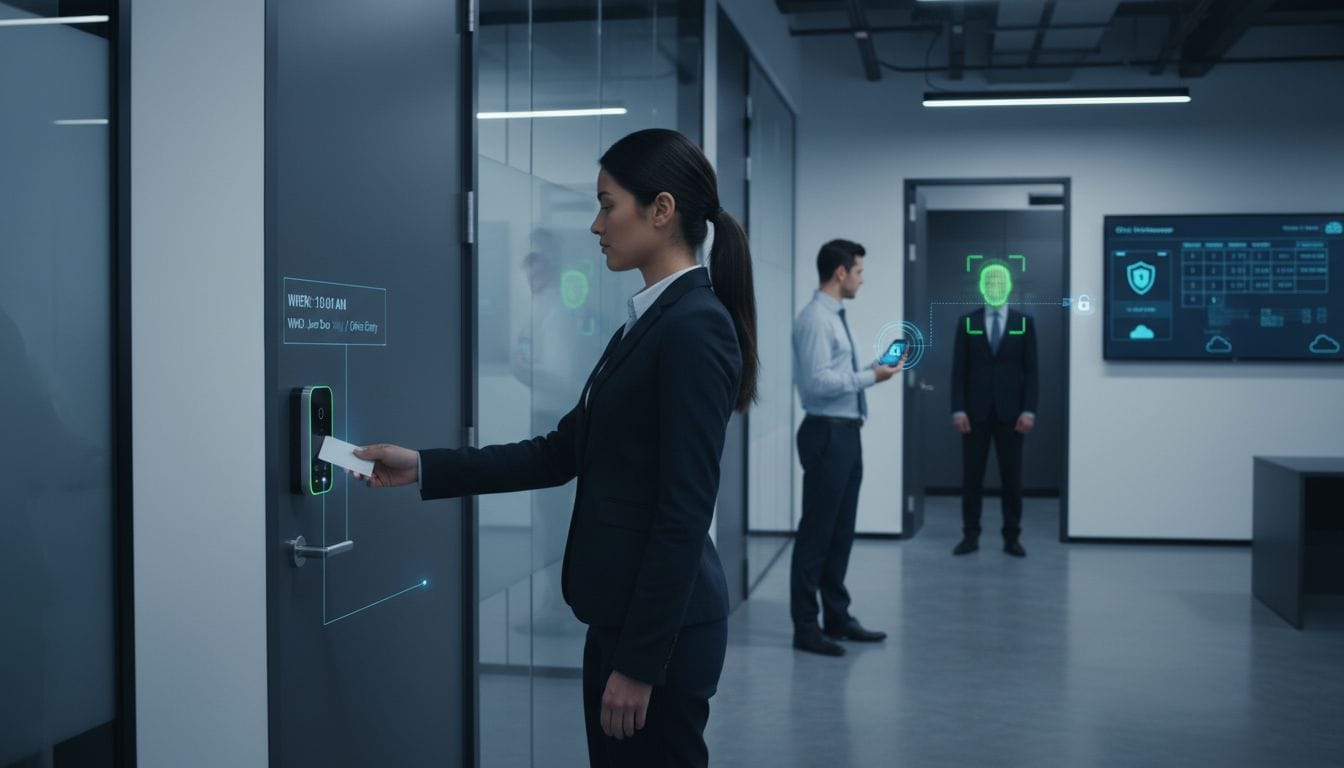
What Is Access Control? Understanding Keycard, Mobile Credentials and Biometric Without Problems.
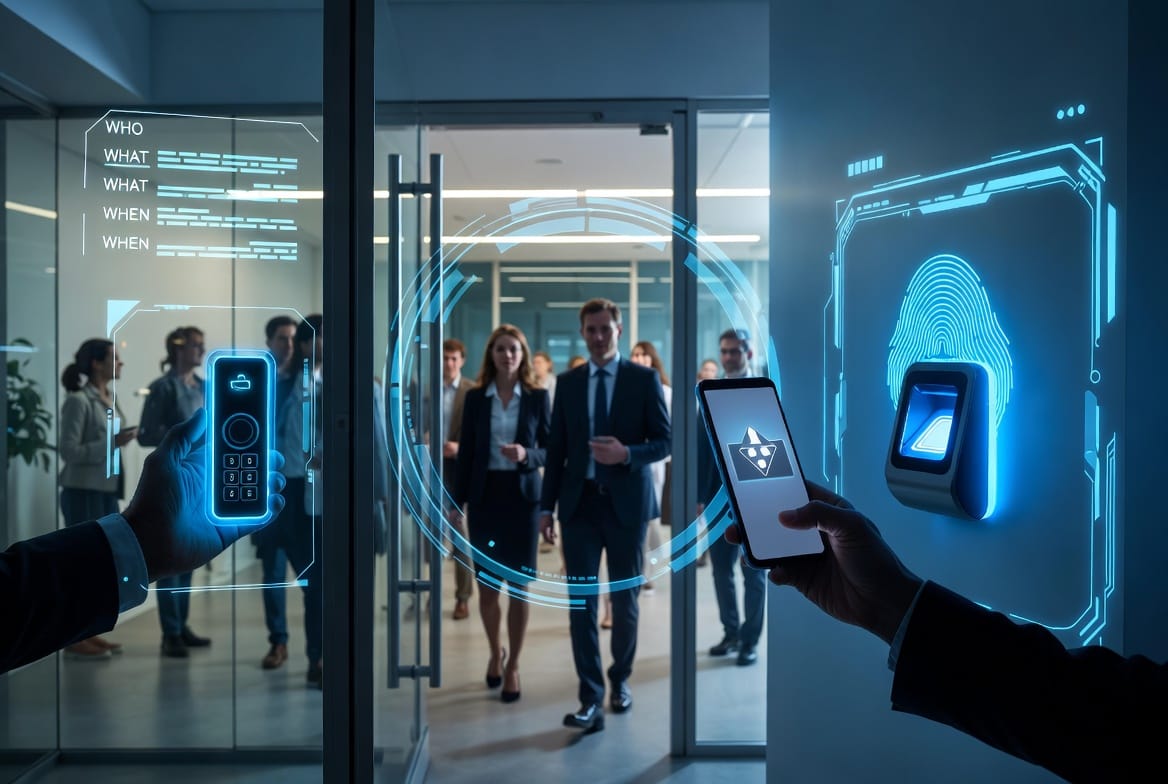
Controlled access is one of the key elements of contemporary physical security. Access control is, at its very essence, WHO-WHAT-WHEN is permitted to enter a building, a room, and a system inside a secured room or otherwise. Instead of using conventional keys, which are copied or lost, modern access control systems are based on checked identities that allow access or block access depending on the set of pre-established rules.
In the case of businesses, schools, healthcare organizations, and even office buildings, access control introduces security, enhances audits, and eases administration. However, having several technologies to choose from, it is possible to be confused by the multiple keycards, mobile credentials, and biometric options, not knowing which one is a good fit.
This article defines access control and also dissects the three most popular forms of authentication techniques currently in use.
What Is Access Control?
Access control refers to a security method that controls the access and use of resources by personnel or by an apparatus in both physical and virtual settings. Physical security generally describes digital systems used in place of mechanical locks and keys.
The basic access control system consists of four main parts:
- Identification (e.g., a keycard, smartphone, or fingerprint).
- Readers (scanners/readers of the credential)
- The controllers (hardware susceptible to access requests and communicative with the system)
- Management software (to allocate permissions, check logs, and administrate users)
These systems may either be basic, like one door connecting to a card reader, or more complex systems managing multiple locations that have hundreds of doors, gates, and elevators with a network of hundreds of card readers.
Access Keycard: The Existing Standard.
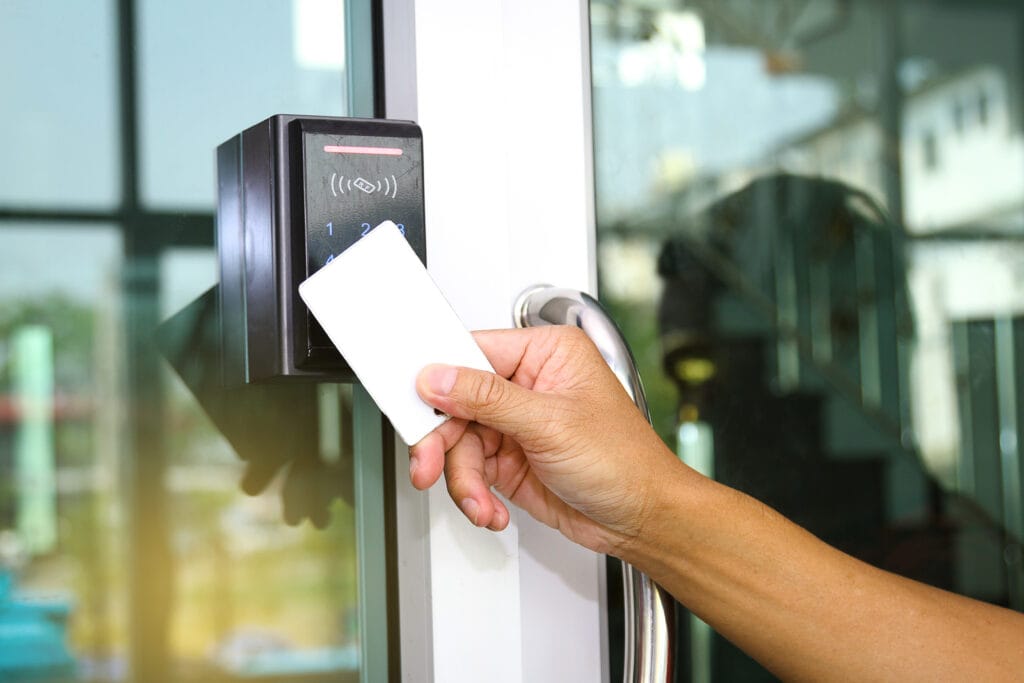
The most popular device of access control is the access keycard that can be in the form of proximity cards or smart cards. To open a door, the employees or the authorized users are bound to do nothing but tap or wave their card in the vicinity of a card reader.
There are two main types:
- Proximity cards (125 kHz): They are cheap and dependable but provide low security, as they are cloneable with cheap equipment.
- Smart cards (13.56 MHz): They can use encryption and mutual authentication, thus being much more secure and plugging into an environment that might be at risk.
Keycard systems are simple to use and administer. Deactivation of lost cards is instantly done using software and does not require rekeying locks. Nevertheless, cards may be lost or stolen and distributed, which brings more risks unless accompanied by other screening measures.
Mobile Credentials: Keeping Your Pocket Secure.
Digital keys in mobile credentials are smartphones or wearable gadgets (such as smartwatches). Users can unlock doors on the basis of Bluetooth, NFC, or QR code via a secure application instead of a plastic card.
Benefits include:
- Ease: The majority of people today are mobile with their phones.
- Greater security: Mobile credentials may be end-to-end encrypted and may be connected to a device identifier or may be more difficult to replicate.
- Remote management: Credentials can be issued, updated, and revoked in real-time using cloud-based systems.
Mobile access is becoming a trend at the workplace and helps with touchless entry, which is a significant benefit in high-traffic or health-conscious workplaces. But it needs compatible devices, and also the assumption made is that users must have their devices always charged and available.
Biometric Access: Body as the Key.
The biometric access control relies on physical peculiarities, which can be fingerprints, faces, irises, or palm veins, to confirm who they are. As they are also related to the person, biometrics provide a good level of confidence that can encourage the availability of a person who claims to be who they are.
The typical biometric techniques are:
- Fingerprint scanners: Possibly the cheapest and most common, but they are sensitive to dirt or scratches on the surface.
- Facial recognition: Fast and contactless, but it may change with lighting or appearance.
- Iris or retina scanning: Rarely implemented commercially, it is very accurate and hard to compromise.
Biometrics abolishes misplaced or shared credentials. Nevertheless, they pose valuable issues of privacy and must take certain precautions regarding sensitive biometric measures. Besides, the systems must have fallback measures in the event of sensor failure or physical harm to the user.
Selecting the Proper Access Control Method.
Depending on your security needs, cost, number of users, and infrastructure, the optimal solution will be identified. Multi-factor access control is now used by a lot of organizations, and it is a combination of two forms, such as a key card and a PIN or a mobile credential and facial verification, so as to not only be convenient but also highly secure.
Keycards or mobile credentials can also offer the optimal price-to-performance balance to small businesses. Layered authentication or biometrics can be demanded in high-security installations, including data centers (or research labs).
Final Thoughts
Taking the keys to the doors is no longer a matter of access control. It is a strategic level of security that keeps individuals, property, and information safe and allows them to perform operationally efficiently. The idea is to provide access to the right people at the right time.
With the improvement of technology, access control systems will keep on being smart, integrated, and user-friendly. Knowing what you can do today will ensure that you maintain a safer, more reactive world tomorrow.