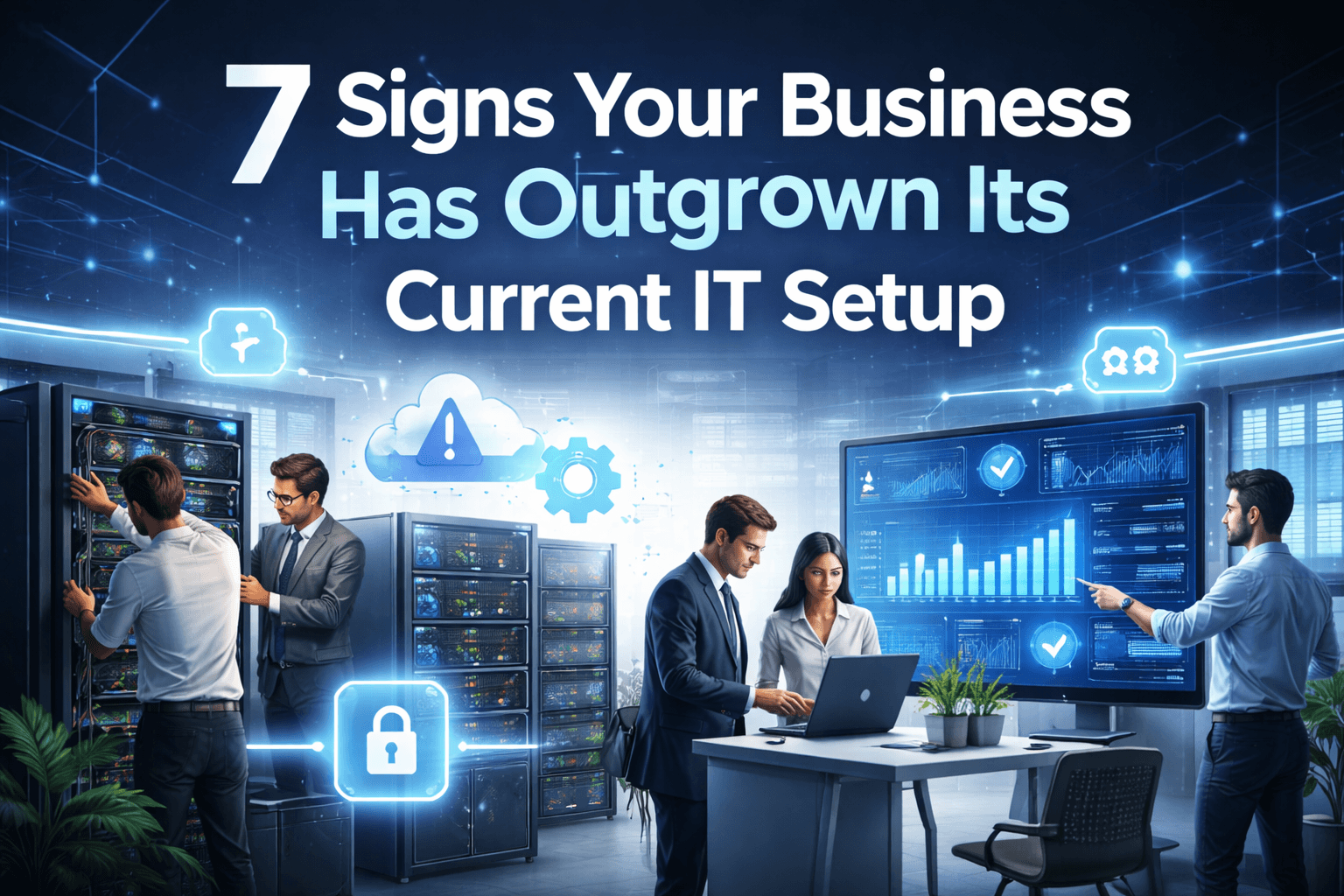
7 Signs Your Business Has Outgrown Its Current IT Setup
Technology is a key element in what modern business does. From communication to data storage, to business application support and customer service, your IT infrastructure is the base of what you do day in and day out. As companies grow, the tech that was a perfect fit may now have issues. Also, many small and mid-sized companies are still using the same IT setup they began with years ago. At first, it may look like all is well. But over time, you see that outdated systems, slow performance, and security issues begin to affect productivity and business growth.
If your business is growing or is putting more into the digital space, it may be time to see if your present IT structure is still able to meet your requirements. We have also identified seven telltale signs that your business may have outgrown its present IT setup.
1. Frequent System Downtime and Technical Issues
One of the most telling signs that your IT setup has issues is regular downtime. When your staff is dealing with system breakdowns, slow networks, or software failures regularly, it is a sign that productivity is going down the drain.
Each minute of downtime is money and time out of your business. Employees can’t get their work done, customer service is affected, and internal processes are slow. If your team is constantly playing catch-up as they wait for systems to reboot or software to load, it may be a sign that your hardware, network, or server infrastructure is no longer up to date.
2. Slow Computers and Poor System Performance
For example, consider a company’s IT environment. As businesses expand, employees typically depend on additional applications, larger datasets, and cloud-based services. Businesses with older computers and servers may find their IT environment becoming a liability.
If IT employees frequently hear complaints about sluggish computers, slow software, or prolonged access to files, IT may be the weak link. Inefficient systems cause work to be performed on slow systems, and modern IT systems are built to address problems related to processing, storage, and networks. Improving IT systems and enhancing storage, processing, and network capabilities helps systems work more efficiently.
3. Increasing Cybersecurity Risks
Cybersecurity threats are getting more state-of-the-art every 12 months. Businesses of all sizes are capacity targets for cyberattacks, which include ransomware, phishing attempts, and data breaches.
If your present-day IT setup lacks proper security gear together with superior firewalls, endpoint protection, daily updates, and stable backup structures, your business enterprise can be exposed to serious dangers.
Outdated structures are particularly vulnerable due to the fact that they’ll now not acquire security updates. A modern-day IT infrastructure must consist of sturdy cybersecurity practices, non-stop tracking, and reliable data safety strategies to protect sensitive business records.
4. Your IT Problems Are Always Reactive
An alternative is implementing a more proactive approach with your IT through Managed IT Support Services. While this approach may appear to save money, in the long run, it cripples the organisation due to its disruptive nature and the costs associated. Providing services to the break-fix model will create further operational downtime during support’s problem reaction operational stages. An alternative is implementing a more proactive approach with your IT. Systems can be monitored and potential problems recognised and dealt with before they become more serious.
5. Employees Are Handling IT Issues Themselves
In most growing companies, IT issues are handled by the staff, which in turn means there is no dedicated IT support team. While some of our employees may have a little tech background, putting them out there to handle complex IT issues is not a great solution.
Also, when employees are tied up in technical issues instead of in their main roles, productivity goes down. Also, this may cause inconsistent system management and security issues if systems are misconfigured. With a proper IT support structure and reliable on-site IT support, technical issues are addressed by professionals right away. which in turn allows employees to get back to what they do best.
6. Your Technology Cannot Support Business Growth
As businesses grow, they tend to adopt new tools like customer relationship management systems, cloud collaboration platforms, data analytics software, and digital communication solutions. If the present IT infrastructure is unable to support new software or does not scale with business growth, it may be an issue for your company. Outdated storage, old servers, and slow networks can put a break on the adoption of current tech. A scalable IT structure allows your company to add new users, applications, and services without disrupting the flow of business. This flexibility is key for companies that plan to grow in the coming years.
7. Lack of a Long-Term IT Strategy
Numerous companies develop no long-term plans for information technology other than when technology decisions are needed. This results in sporadic, inconsistent upgrades, systems that are incompatible, and wasted money. An IT strategy that has a good structure optimally aligns business goals with technology.
A strategy considers future growth, in addition to current needs for system upgrades, infrastructure improvement, and necessary future cybersecurity needs. A lack of strategic planning results in reactive and consistent responses to technology challenges rather than proactive or positive responses that capitalize on technology to provide a competitive advantage. A comprehensive IT roadmap assists businesses in achieving investment value in technology. An IT roadmap also ensures systems are dependable, safe, and suitable to handle growth in the future.
Why Evaluating Your IT Setup Matters
Outgrowing your IT setup is not always a negative signal. In fact, it regularly shows that your business is developing and evolving. However, failing to improve technology at the right time can slow progress and create unnecessarily demanding operational situations.
Modern companies rely upon reliable networks, stable facts systems, and efficient virtual tools. When your IT infrastructure is optimized, employees can work more effectively, systems remain strong, and patron reviews are enhanced.
Regularly evaluating your IT environment permits corporations to become aware of weaknesses, improve previous systems, and put into effect solutions that guide long-term fulfillment.
Final Thoughts
Technology should aid your enterprise growth, no longer restrict it. If your organization is experiencing frequent technical issues, sluggish systems, or increasing cybersecurity concerns, it could be time to rethink your modern IT setup.
Recognizing the symptoms early allows organizations to take proactive steps toward building a more potent, more reliable technology environment. By upgrading infrastructure, improving safety features, and adopting smarter IT techniques, groups can create a basis that supports productivity, efficiency, and destiny expansion.
If your business is experiencing these challenges, it may be time to evaluate your IT environment and consider professional Managed IT Support Services to ensure your systems remain secure, efficient, and ready for growth.