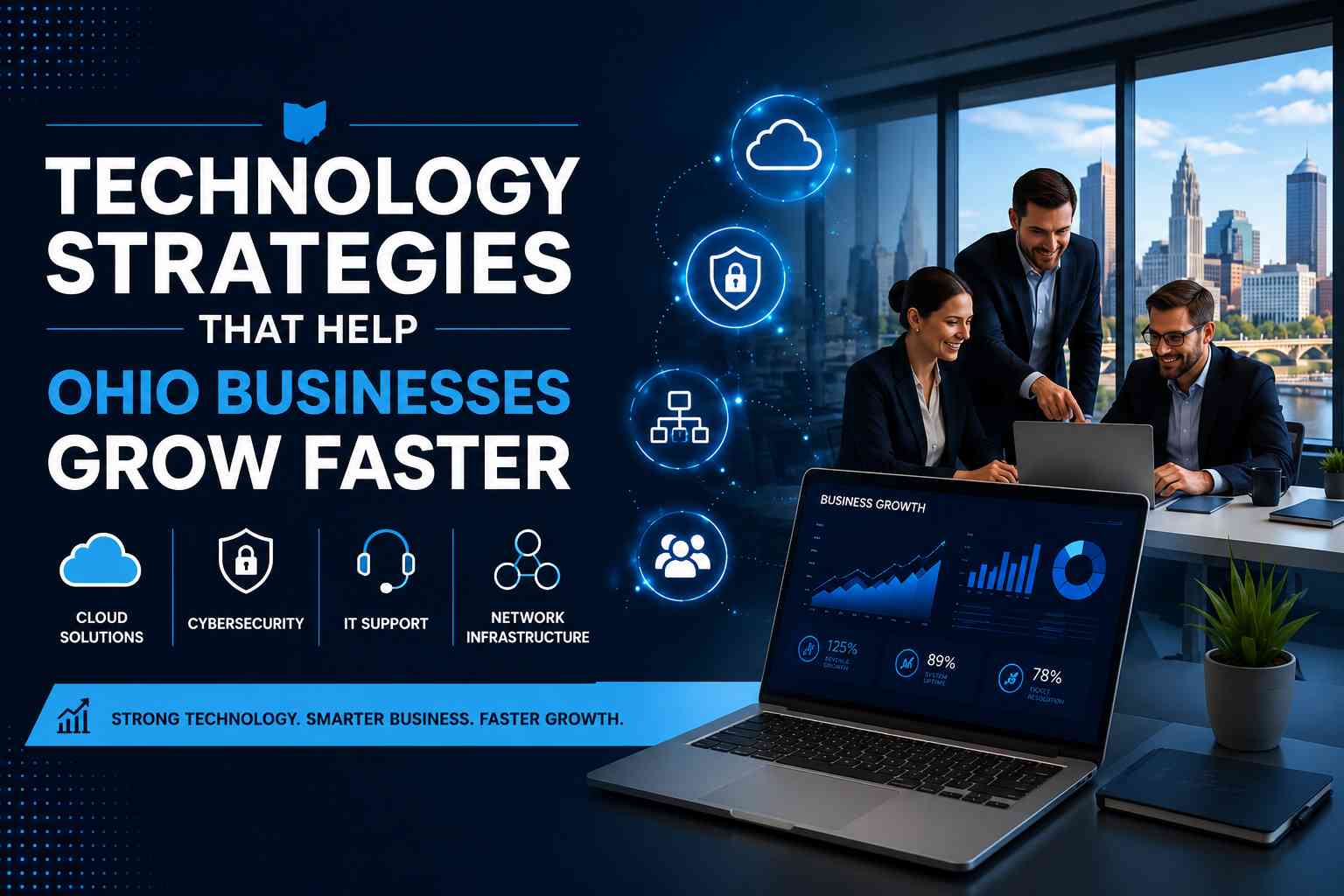
Technology Strategies That Help Ohio Businesses Grow Faster
Technology has become one of the most important drivers of business growth. Whether a company operates in retail, healthcare, manufacturing, professional services, or logistics, the ability to use technology effectively can determine how quickly it grows and how well it competes in today’s market. Across Ohio, businesses are investing in modern technology solutions to improve productivity, strengthen security, enhance customer experiences, and support long-term expansion.
Many organizations start with basic technology systems that work well in the early stages of growth. However, as operations expand, those same systems can become obstacles. Slow networks, outdated hardware, cybersecurity risks, and inefficient processes can reduce productivity and limit business performance. Companies that adopt the right technology strategies gain a competitive advantage by reducing downtime, improving communication, and creating a scalable foundation for future growth.
Why Technology Matters for Business Growth
Modern businesses depend on technology for nearly every aspect of daily operations. Employees rely on computers, internet connectivity, cloud applications, communication tools, and business software to perform their work efficiently. Customers also expect fast responses, secure transactions, and seamless digital experiences.
When technology systems are properly planned and maintained, businesses can:
- Improve employee productivity
- Reduce operational costs
- Enhance cybersecurity protection
- Support remote and hybrid work environments
- Improve customer service
- Increase business efficiency
- Scale operations more effectively
Companies that fail to modernize their technology often experience frequent disruptions, security vulnerabilities, and slower growth compared to competitors that embrace innovation.
Build a Strong IT Foundation
One of the most effective strategies for business growth is creating a reliable IT infrastructure. A strong technology foundation ensures that employees can access systems quickly, collaborate efficiently, and perform their responsibilities without interruption.
Reliable infrastructure includes secure servers, dependable internet connectivity, updated hardware, modern software, and properly configured networks. Businesses should regularly evaluate their technology environment to identify weaknesses before they impact operations.
An organized IT environment also makes it easier to introduce new technologies, applications, and business processes as the company grows. Without a strong foundation, expansion often creates additional technical challenges that become expensive to resolve later.
Use Cloud Technology to Increase Flexibility
Cloud computing has transformed how businesses operate. Instead of relying solely on physical servers and local storage, organizations can access applications and data securely from virtually anywhere.
Cloud-based solutions provide several benefits:
- Easier collaboration among employees
- Reduced hardware costs
- Better data accessibility
- Improved disaster recovery capabilities
- Enhanced scalability
- Simplified software updates
Businesses can quickly adapt to changing demands without investing heavily in additional infrastructure. As organizations continue to support remote and hybrid work models, cloud technology remains a critical component of business growth strategies.
Prioritize Cybersecurity from Day One
Cybersecurity is no longer an optional investment. Every business, regardless of size, faces potential threats from ransomware, phishing attacks, malware, and unauthorized access attempts.
A successful technology strategy includes multiple layers of security protection. Businesses should implement strong password policies, multi-factor authentication, employee security training, endpoint protection, and regular software updates.
Cybersecurity incidents can result in financial losses, reputational damage, operational disruptions, and legal complications. Investing in proactive security measures helps businesses avoid these risks while building trust with customers and partners.
Regular security assessments can identify vulnerabilities before attackers exploit them. This proactive approach significantly reduces the likelihood of costly breaches.
Automate Repetitive Business Processes
Automation allows organizations to eliminate repetitive manual tasks and focus on higher-value activities. Many business functions can be automated, including customer communications, invoicing, scheduling, reporting, inventory management, and workflow approvals.
Automation provides several advantages:
- Increased efficiency
- Reduced human errors
- Faster task completion
- Better consistency
- Improved employee productivity
- Lower operational costs
By automating routine processes, businesses can redirect resources toward innovation, customer service, and strategic growth initiatives.
Improve Business Communication Systems
Effective communication plays a major role in organizational success. Modern communication technologies help teams collaborate more efficiently regardless of their physical location.
Businesses should invest in tools that support:
- Video conferencing
- Instant messaging
- Team collaboration
- File sharing
- Unified communications
Improved communication reduces delays, enhances teamwork, and helps employees make faster decisions. These benefits become increasingly valuable as organizations grow and manage larger teams.
Technology-driven communication solutions also improve customer interactions by enabling faster responses and more consistent service experiences.
Invest in Reliable Network Infrastructure
A business network serves as the backbone of daily operations. Every application, communication platform, and connected device depends on network performance.
Organizations that experience slow connectivity, unreliable internet access, or network outages often face reduced productivity and customer dissatisfaction. Investing in reliable infrastructure helps prevent these issues.
Businesses seeking long-term growth often strengthen their internal connectivity through professional network design and implementation. Many organizations rely on network cabling Columbus , Ohio providers to create dependable systems capable of supporting modern applications, cloud platforms, and expanding technology requirements.
A well-designed network improves performance, supports future expansion, and minimizes operational disruptions.
Leverage Data for Better Decision-Making
Data has become one of the most valuable business assets. Organizations collect information from customers, sales activities, marketing campaigns, financial systems, and operational processes.
The ability to analyze this information effectively allows business leaders to make smarter decisions. Data-driven insights help companies:
- Identify growth opportunities
- Improve customer experiences
- Optimize operational efficiency
- Forecast future trends
- Measure performance accurately
Businesses that use analytics tools gain a clearer understanding of their operations and can respond more quickly to changing market conditions.
Create a Scalable Technology Roadmap
Technology investments should support both current needs and future growth objectives. Businesses that implement short-term solutions without considering scalability often encounter limitations as they expand.
A technology roadmap provides a structured plan for future investments and upgrades. It helps organizations prioritize initiatives based on business goals, budget requirements, and operational needs.
Key areas often included in technology roadmaps are infrastructure upgrades, cybersecurity improvements, software modernization, cloud adoption, and workforce enablement.
Planning ahead prevents unexpected expenses and ensures technology remains aligned with organizational growth strategies.
Support Employees with Ongoing Technology Training
Even the best technology systems deliver limited value if employees do not know how to use them effectively. Continuous training helps teams maximize productivity while reducing mistakes and security risks.
Training programs should cover:
- Software usage
- Cybersecurity awareness
- Collaboration tools
- Remote work best practices
- Data management procedures
Employees who understand technology systems are more confident, productive, and capable of contributing to business success.
Organizations that prioritize training often experience smoother technology adoption and higher returns on their technology investments.
Signs You Need Managed IT Services
As businesses grow, managing technology internally becomes increasingly challenging. Many organizations begin experiencing recurring technical issues, security concerns, and operational inefficiencies that consume valuable time and resources.
Common indicators include frequent downtime, slow network performance, cybersecurity concerns, outdated systems, rising IT costs, and limited internal expertise. At this stage, partnering with technology professionals can help businesses maintain reliable operations while focusing on core objectives.
Many growing companies choose Top Benefits of Managed IT Services solutions to gain access to experienced IT professionals, proactive monitoring, strategic guidance, and ongoing support without the expense of maintaining a large in-house department.
Professional support providers help organizations improve reliability, strengthen security, and ensure technology continues supporting business growth.
Strengthen Physical Infrastructure for Future Expansion
Physical infrastructure remains a critical component of modern business operations. While cloud solutions receive significant attention, the underlying cabling systems that connect devices, servers, phones, and network equipment remain essential.
Businesses planning for growth often evaluate their connectivity infrastructure to ensure it can support increasing technology demands. Working with experienced Structured cabling companies Columbus can help organizations create organized, scalable environments that simplify maintenance and improve long-term performance.
Structured cabling systems support faster troubleshooting, improved reliability, and easier expansion as new technologies are introduced into the business environment.
Conclusion
Technology is no longer simply a support function; it is a strategic growth driver. Ohio businesses that invest in strong infrastructure, cybersecurity, cloud solutions, automation, communication tools, employee training, and scalable planning position themselves for long-term success.
Organizations that proactively modernize their technology environments gain measurable advantages through improved productivity, stronger security, reduced downtime, and better customer experiences. Many growing companies achieve these benefits by partnering with providers that offer Managed IT Services in Columbus, Ohio, ensuring their technology remains secure, reliable, and aligned with business goals.
As markets continue evolving, businesses that align technology investments with growth objectives will be better prepared to adapt, compete, and expand. The most successful companies understand that technology is not just about solving today’s challenges. It is about creating a foundation that supports future opportunities, enables innovation, and drives sustainable business growth for years to come.