Security Camera Installation Columbus, OH | Commercial CCTV Experts
Security is no longer something businesses can treat as an afterthought. A retail store, office, warehouse, restaurant, medical facility, or industrial property may have valuable equipment, inventory, customer information, employees, and restricted areas that need consistent protection. Traditional locks and alarms still have a role, but modern businesses increasingly need visual monitoring to understand what is happening across their property.
A professionally designed surveillance system can help businesses monitor entrances, parking areas, workspaces, storage rooms, loading zones, and other important locations. More importantly, commercial CCTV is not simply about putting cameras on walls. It involves camera selection, positioning, network connectivity, recording, storage, remote access, and ongoing system management.
For businesses searching for security camera installation Columbus Ohio, the goal should be to choose a solution designed around the property’s actual security requirements rather than purchasing a collection of cameras without a clear coverage plan.
Why Columbus Businesses Need Professional CCTV
Commercial properties often have multiple entrances, parking areas, restricted zones, valuable assets, and after-hours activity. Without proper surveillance, investigating security incidents can be difficult.
A professionally installed CCTV system provides clear visibility, helps monitor vulnerable areas, and gives businesses useful footage when incidents need to be reviewed.
The key difference between commercial CCTV and basic cameras is professional planning. Proper camera placement, lighting, viewing angles, recording, and network connectivity ensure better coverage without unnecessary equipment or expense.
How a Commercial CCTV System Works
- CCTV Cameras: Capture live video from entrances, parking areas, offices, warehouses, and other important locations.
- PoE Network Switch: Connects IP cameras to the network and can provide power through Ethernet cabling.
- NVR / Video Management System: Receives camera footage, manages recordings, and makes video easier to search and review.
- Secure Video Storage: Stores recorded footage according to the business’s required retention period.
- Remote Monitoring: Allows authorized users to view live or recorded footage from supported devices.
- System Scalability: Additional cameras and devices can be added when the business expands.
- Overall Performance: Camera placement, lighting, network reliability, recording capacity, and equipment quality all affect the effectiveness of the system.
Commercial CCTV vs Basic Camera Systems
Not every camera system is designed for commercial use. A small basic camera may be appropriate for limited monitoring, but larger businesses often require a system that can support multiple cameras, centralized recording, professional installation, and future expansion.
Commercial CCTV System | Basic Camera Setup |
| Designed around business security requirements | Designed for basic monitoring |
| Professional camera placement | Limited placement planning |
| Centralized recording | Basic or local recording |
| Scalable for additional cameras | Limited scalability |
| Network integration | Minimal integration |
| Professional configuration | Often self-configured |
| Designed for ongoing business use | Better suited to simple applications |
For a commercial property, the objective should not be to buy the most cameras at the lowest price. The objective is to create reliable coverage where it matters most and make the system easy to manage as the business changes.
A professional system can also provide a more organized approach to maintenance and troubleshooting. When cameras, network equipment, recording systems, and storage are properly documented, technicians can identify problems more efficiently.
Where Should Commercial Cameras Be Installed?
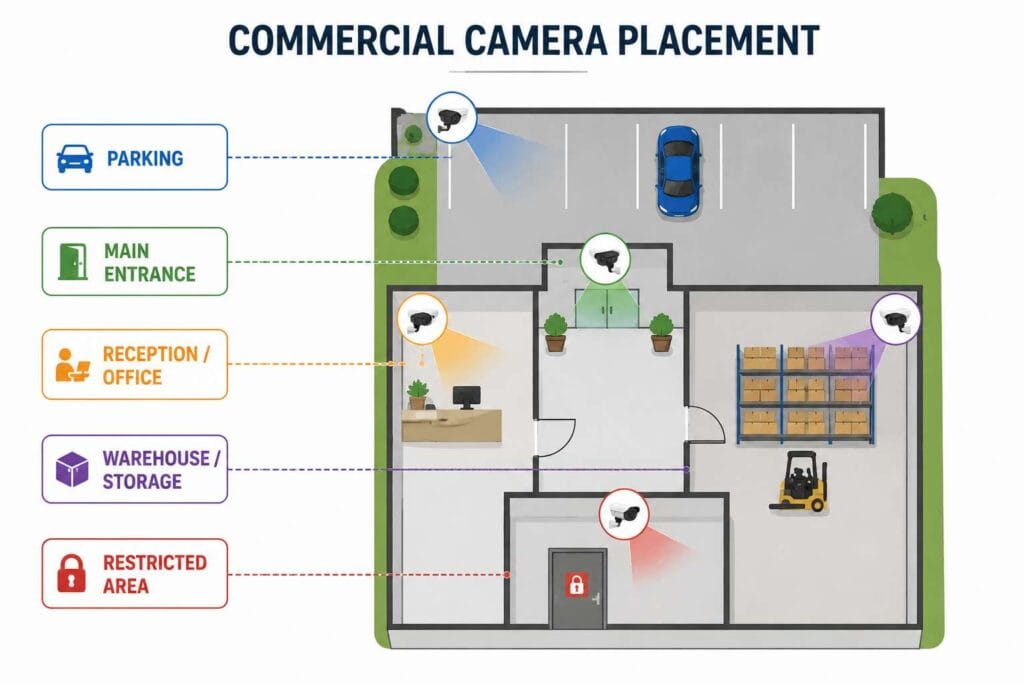
Camera placement can have a bigger impact on surveillance effectiveness than simply increasing camera resolution. A camera should be positioned according to what the business needs to see.
Entrances and exits are usually important because they are points where people enter and leave the property. Parking areas and exterior zones may require coverage for vehicles, visitors, and after-hours activity. Warehouses and storage areas can benefit from cameras positioned to monitor inventory and movement.
Restricted areas can also require additional attention. Server rooms, equipment areas, employee-only entrances, loading zones, and other sensitive locations may need dedicated coverage.
Why Cabling and Network Infrastructure Matter
IP cameras depend on network connectivity, which makes the underlying infrastructure an important part of the installation. When a business has multiple cameras transmitting video continuously, network design becomes even more important.
Reliable network cabling Columbus Ohio infrastructure can support communication between cameras, switches, recording equipment, and other connected devices. Proper cable selection, routing, labeling, and testing can also make future maintenance easier.
Cable management matters because commercial properties often grow over time. A business may add more cameras, access control devices, wireless access points, computers, or other network equipment. An organized infrastructure makes those future changes easier to manage.
Businesses that are planning a larger technology upgrade may also evaluate structured cabling companies Columbus when developing their network and surveillance infrastructure. Coordinating cabling and security work can help avoid duplicate installation work and create a more organized technology environment.
CCTV and Business Network Security
A connected surveillance system must also be protected. Cameras and recording equipment are network-connected devices, which means businesses should consider how authorized access is managed and how the surveillance environment fits into the company’s wider technology security strategy.
Business Network Security should include practical controls around surveillance equipment, including strong credentials, appropriate user permissions, secure remote access, firmware maintenance, and network segmentation where appropriate.
Not every employee needs access to every camera or recorded video. Access should be based on business responsibilities. For example, a manager may need access to certain areas while technical personnel may require different permissions for system maintenance.
Remote access should also be configured carefully. Convenience is valuable, but businesses should avoid exposing surveillance systems unnecessarily. A properly configured environment can provide authorized users with useful remote access while reducing avoidable security risks.
Professional vs DIY CCTV Installation
DIY cameras can appear attractive because they may have a lower initial purchase price. However, commercial properties often involve requirements that are more complicated than simply connecting a camera to an application.
| DIY Installation | Professional Installation |
| Basic setup | Property-specific system design |
| Limited coverage planning | Optimized camera positioning |
| Self-managed troubleshooting | Professional technical support |
| Basic cable management | Organized infrastructure |
| Limited expansion planning | Designed for future growth |
| User handles configuration | Professional system configuration |
For a small application, a basic camera may be enough. For a commercial property, however, poor placement or weak infrastructure can create blind spots and operational problems.
Professional installation also provides accountability during the setup process. Instead of leaving the business to determine why a camera is not recording correctly, a professional installer can test the system and verify that its major components are functioning together.
CCTV Integration With Access Control and Alarms
Cameras become more useful when they are considered part of a broader security environment.
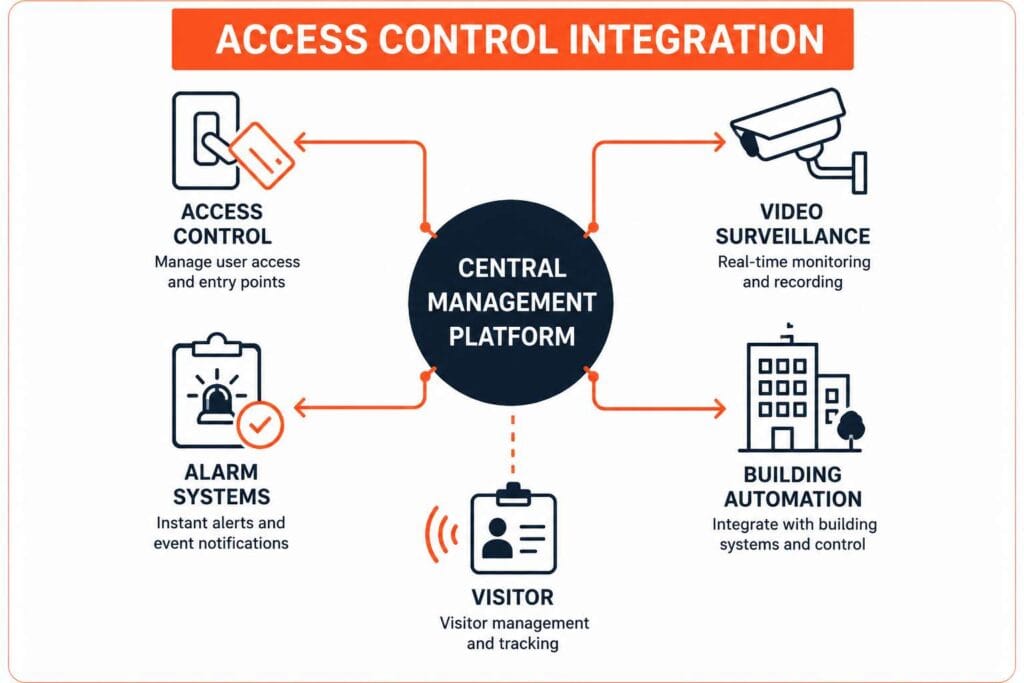
This type of integration can help businesses understand security events more clearly. For example, access control may record that a restricted door was opened, while a nearby camera can provide visual context around the event.
Similarly, an alarm can indicate that something requires attention. Working with experienced Burglar alarm companies can help businesses choose alarm solutions that complement their CCTV and access control systems.
The exact level of integration depends on the equipment and business requirements, but planning these technologies together can create a more coordinated and effective security strategy.
CCTV and IT Support for Business Operations
Because modern CCTV systems depend on networks, switches, storage devices, and remote connectivity, technical support can become an important part of maintaining the system.
Businesses may need assistance when a camera stops communicating, remote access fails, network equipment requires configuration, or a new camera needs to be added.
For organizations that need fast technical assistance, Columbus IT Support in 2 Hours can be particularly valuable when security technology and business IT infrastructure are closely connected.
Having access to knowledgeable technical support can reduce downtime and help businesses avoid situations where a security system remains partially unavailable for an extended period.
Final Thoughts
Commercial CCTV works best when camera placement, cabling, networking, recording, storage, and access control are planned together. A professional installation helps Columbus businesses achieve reliable coverage without unnecessary equipment.
Whether it’s an office, retail store, warehouse, or industrial facility, Vortex IT Systems can help assess your security requirements and develop a reliable, scalable CCTV solution designed for long-term protection. Contact Us Today